
What this picture is
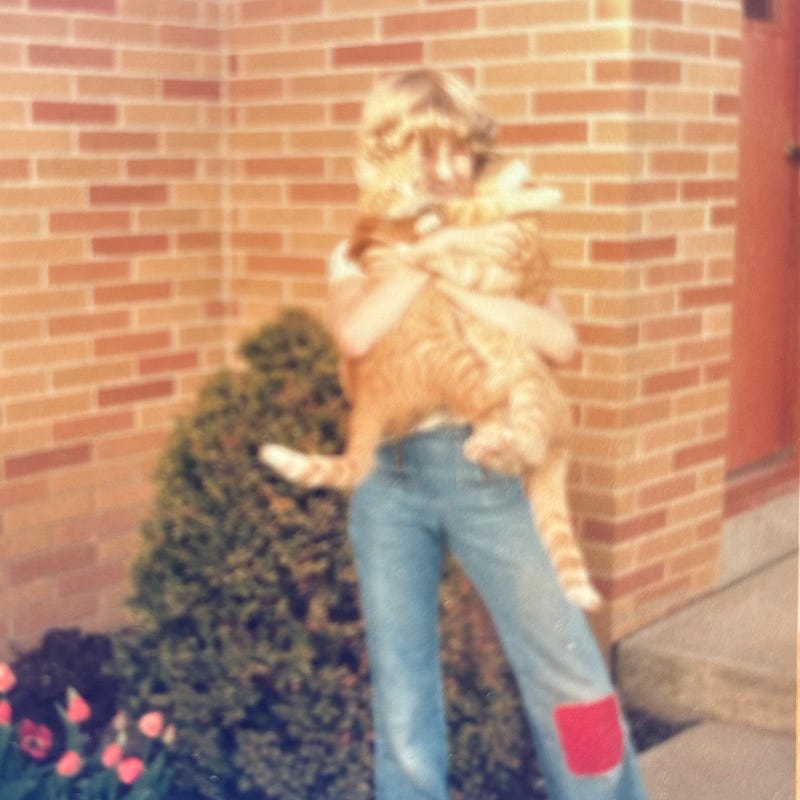
This is a picture of me holding our two orange tabby cats. I am nine years old and wearing my favorite jeans. They have a red patch ironed on by my mom. I am standing in front of our family home in Appleton, Wisconsin.
Technically, we lived in Grand Chute. But since Grand Chute did not have a post office, our mailing address was Appleton.
The cats are Toby and Bobby. Bobby is on the left.
Why I saved this picture
We got Toby and Bobby when they were kittens. Previously, we had some fish, two miniature turtles and a parakeet. I really wanted a puppy.
Toby and Bobby were my mom’s compromise to my incessant requests for a dog.
I really loved those cats. While they were indoor cats, with our busy household, it was a usual occurrence for one or both of the cats to get out.
When it was time to feed them, I would shake the Kitten Chow box. They’d always come running.
One day, we couldn’t find Bobby. We looked everywhere. He didn’t come when I shook the kitten chow box. I was devastated.
My dad put a missing cat ad in our local paper. A day later, someone called him. The woman had found a cat that fit Bobby’s description. She reported to my dad that there was just one thing.
It seemed Bobby had been in a fight. He was missing an eye.
My dad went to pick him up. When he brought Bobby home. I took a look at him and declared, “That’s not Bobby!”
To which my kind-hearted exasperated dad said, “It is Bobby.” After a pause, he added, “If I lost an eye, would you say you didn’t know me?”
His comment stung and it set me straight. It helped me get over the shock of my one-eyed cat. After which I gave him my hugs and affection and welcomed him home.
Help each other recover from hard times
When someone suffers from a hardship, be ready to support them with re-entry. Reach out and be there when they first come back to the office and reconnect with their teammates.
Also consider workplace adjustments that the person may need, due to their physical or psychological injury.
Plus, be on the lookout for team members who need help adjusting to the new reality of the effects of the hardship on the person.
Key Points
Recovery doesn’t end when someone returns—supporting re-entry with empathy and adjustment helps people regain confidence and belonging.
Warm Demander leaders notice when circumstances change and respond with care, making space for healing while keeping people connected to the team.